

The Counter Intelligence Kashmir (CIK) unit of the Jammu and Kashmir Police has made a significant breakthrough in its efforts to disrupt terrorist financing networks. On Wednesday, the CIK conducted raids at a business establishment in Delhi, arresting two individuals and seizing critical evidence of a sophisticated cross-border terror funding syndicate.
The operation, which was carried out under legal sanction via search warrants issued by the Special Judge designated under the NIA Act in Srinagar, targeted Shalimar Textiles in Lajpat Nagar, New Delhi. The CIK alleged that the business was being used as a front to funnel funds to the proscribed terrorist organization Lashkar-e-Taiba (LeT) in Kashmir.
According to the CIK, the investigation revealed a “chilling conspiracy” orchestrated by LeT handlers and commanders from across the Line of Control (LoC), who were working in collusion with Pakistani nationals based in Gulf countries and other foreign territories. These individuals were allegedly using a network of couriers, posing as pilgrims, businessmen, and expatriates, to smuggle terror funds into Kashmir.
The CIK identified Mohammad Ayoub Bhat, the proprietor of Shalimar Textiles, and Mohammad Rafiq Shah, a resident of Srinagar, as key players in the terror funding network. Both individuals were allegedly involved in facilitating LeT’s activities in the Valley.
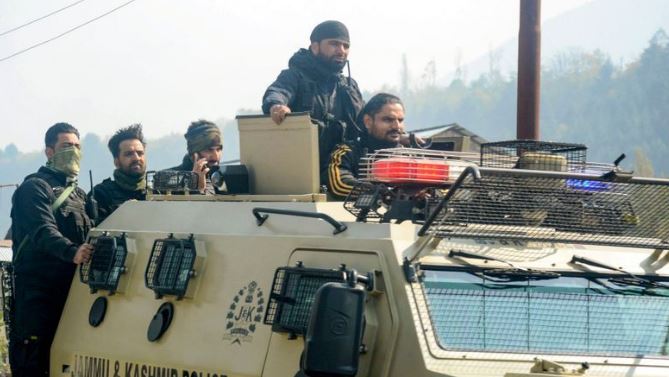
The raid
During the raids, the CIK seized critical digital evidence, including suspicious communications with Pakistani handlers, foreign remittances routed through underground hawala channels, and encrypted chats with terror affiliates. The seized devices and documents are currently undergoing forensic analysis, which is expected to reveal a larger, deeply entrenched terror funding web.
Preliminary interrogation of the arrested suspects has begun, and officials claim that it is already revealing an international terror financing ring involving foreign-based handlers, Gulf-based sympathizers, and local Over Ground Workers (OGWs). The ring is allegedly linked through a covert cash pipeline aimed at fomenting unrest and bloodshed in Jammu and Kashmir.
The CIK’s operation is part of a wider investigation under the Unlawful Activities (Prevention) Act (UAPA) and other relevant sections of the Indian Penal Code. The agency is working closely with Delhi Police to further investigate the case and uncover the extent of the terror funding network.
The CIK and Indian military have overseen operations to dismantle multiple terrorist bases in Pakistan and Pakistan-administered Kashmir, including those of Jaish-e-Mohammed. Indian intelligence claims that Jaish is secretly rebuilding its headquarters in Bahawalpur, allegedly under the guise of mosque and madrasa reconstruction, with the support of the Pakistani government.

On Monday, August 4, three terrorists – Hashim Musa (aka Suleiman), Abu Hamza (aka Harris) and Yasir – were killed in a shootout near Srinagar. It was Musa who was believed to have masterminded the attack on Hindu tourists visiting the Baisaran Valley in Pahalgam in southern Kashmir.
Kashmiri political activist Javed Bey claims in a statement on X that all three militants were linked to Lashkar-e-Taiba (LET), which currently operates under the name Resistance Front (RF). LIT, based in Pakistan’s Punjab province, is led by Hafiz Saeed. Bey also said that Jaish-e-Mohammed (JeM), another organization active in Kashmir, is based in South Punjab and is led by Maulana Masood Azhar.
The activist claims that these organizations systematically recruit youth from the economically disadvantaged southern areas of Pakistani Punjab to commit violent acts across the region, including Kashmir. Bey believes that these groups are supported by the Pakistani army and the Inter-Services Intelligence (ISI).
In his post, Bey noted that while religious minorities such as Hindus and Sikhs still reside in Pakistani provinces such as Sindh, Balochistan, and Khyber Pakhtunkhwa, Punjab has seen significant demographic changes that have led to the disappearance of most Hindus and Sikhs. The activist attributes this shift to anti-Hindu sentiments prevalent in some sections of Punjabi society.