
In a rare and wide-ranging audio message released on February 21, 2026, ISIS spokesman Abu Hudhayfa al-Ansari sought to reassert the group’s relevance in Syria, calling for jihad against the government of Ahmed al-Sharaa. The 35-minute address, titled “Right from Wrong is Now Clear,” framed the Syrian government as “apostates” and “infidels” for its alleged subservience to the U.S., while positioning ISIS as the only group committed to “true” jihad and Sharia.
Prior to this the last leadership message from ISIS, issued in March 2024, marked the 10th anniversary of its self-proclaimed “caliphate,” but since then, the group has been largely silent, relying on its weekly newspaper, al-Naba, to disseminate its increasingly defensive and fragmented narrative.
The message comes amid ISIS’s deepening struggles in Syria, where the group has faced significant setbacks since the rise of Hayat Tahrir al-Sham (HTS) to power in December 2024.
However, these public calls to reassert relevance in Syria are at odds with the organization’s actions in recent years. IS activity in Syria and Iraq (the heartland of its former caliphate) declined sharply in 2025. Instead, the bulk of IS attacks and activity has been attributed to its African affiliates. This has been heavily reflected in al-Naba much to the disgruntlement of elements of the group’s online support, some of whom have accused IS of abandoning its caliphate.
A Call to Arms Against the Syrian Government
Al-Ansari declared that waging jihad against the Syrian government and its army was a “top priority,” urging militants to mobilize all efforts toward this goal. He dismissed the notion that the fight in Syria had ended, declaring that the country had entered a “new chapter” of conflict that would continue “until Judgment Day.”
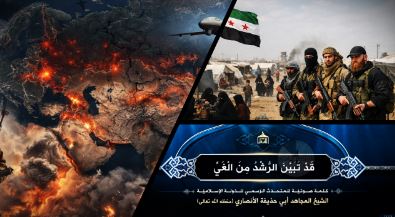
The spokesman invoked apocalyptic prophecies, referencing the battles of Dabiq and the White Minaret in Damascus, which have long been central to ISIS’s ideology. This rhetoric underscores the group’s attempt to rekindle its narrative of an inevitable global caliphate, despite its current decline.
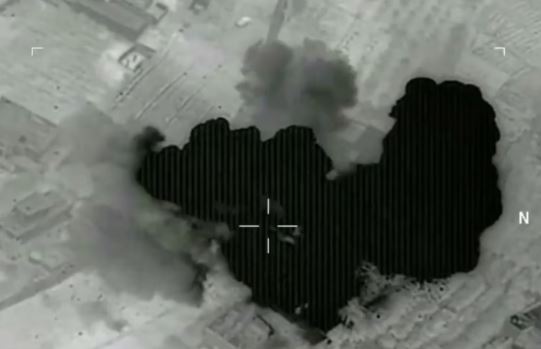
The Syrian state news agency SANA recently reported that ISIS militants killed four government security personnel in northern Syria on Monday 23 February, in an attack described as the most violent launched by the extremist group against government forces since the overthrow of Bashar al-Assad’s regime. This in itself is damning for the group. An attack that killed 4 is reported as the deadliest the group has conducted in over a calendar year. Whilst publicly IS propaganda would laud such efforts, behind the scenes IS leadership must be wondering what has happened in its former heartland. An increase in airstrikes has thinned the IS leadership cadre in the region and security forces have proved effective in arresting IS members and scuppering planned attacks. Whilst it is unclear what is driving this. Has the organization moved its experienced fighters and planners to other theatres such as Africa, is this down to poor security practices or has the group simply been infiltrated by Syrian security forces to the point that it is no longer effective?
Syrian Government response
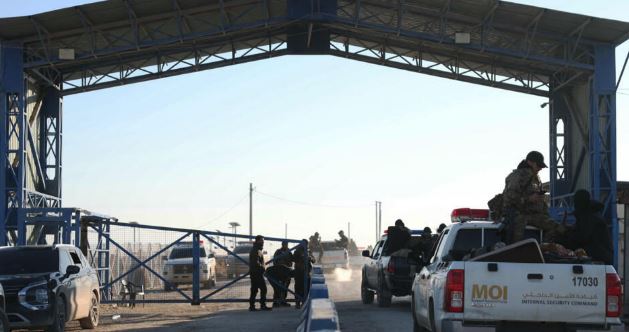
Syrian Interior Minister Anas Khattab said on Tuesday 24 February that security forces remain vigilant in tracking and disrupting ISIS‑related terrorist activity that seeks to destabilize the country. In a post on the X platform, Khattab warned that “outlaws—from remnants of the former regime and its militias to ISIS cells and their affiliates—are relentlessly targeting the region’s stability, from the coastal mountains to the eastern plains and the three governorates there.”
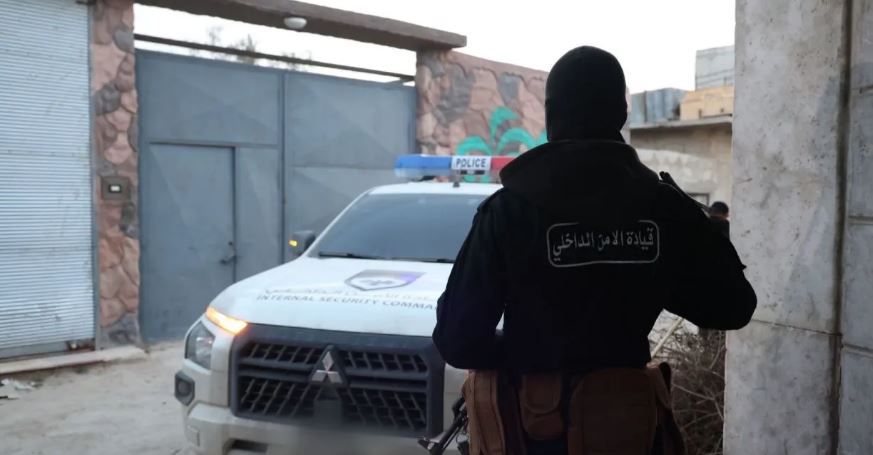
He added that the ministry continues to raid ISIS hideouts, pursue the group’s remnants, and hunt down former‑regime criminals. “We will not cease confronting any threat to the security of our homeland and our people across the entire nation,” Khattab declared.
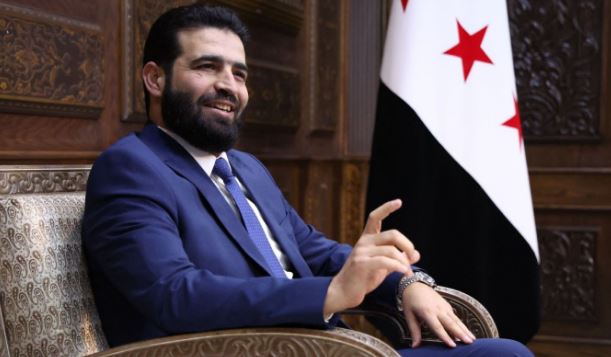
According to the minister, ISIS is now attempting to sabotage the gains made in the east by exploiting disaffected youth, especially after locals have celebrated the return of security and stability. Khattab concluded by praising the interior ministry’s “heroes,” whose “meticulous monitoring of all terrorist activity proves every day that they are the nation’s shield, sacrificing everything so citizens can live in peace and safety.”
Exploiting Dissatisfaction and Calling for Defections
ISIS also sought to exploit dissatisfaction among jihadist and hardline Islamist circles in Syria in the speech, urging rival factions to defect to its ranks. Al-Ansari criticized the Syrian government’s handling of IS-linked prisoners, particularly those held in al-Hol camp, accusing it of “taunting” ISIS and attempting to assert superiority by exploiting the issue.
The message also addressed Sunni Muslims in Syria, urging them not to “waste their sacrifices” from years of civil war in exchange for “nationalism and democracy.” Instead, al-Ansari called on them to accept nothing short of full Sharia governance, reinforcing ISIS’s rigid ideological stance.
A Gloating Tone and Internal Divisions
ISIS’s tone was marked by gloating over the fate of al-Qaeda, which dissolved its Syria branch, Hurras al-Din, in January 2025. Al-Ansari mocked al-Qaeda for its alleged abandonment by Ahmed al-Sharaa, the leader of HTS, who had previously been backed by al-Qaeda before severing ties in 2016.
The message also highlighted internal divisions within the pro-ISIS online community, with supporters expressing disappointment over the group’s failure to secure the release of its prisoners. ISIS’s inability to free its members from al-Hol camp, now under the control of the Syrian government, has further eroded its credibility among followers.
Whilst this is the expected response from ISIS it is difficult to argue that the group’s failure to free the wives and children associated with the group from al-Hol is anything less than a significant embarrassment. The topic has been a consistent source of frustration amongst IS online supporters and this infighting has been further exacerbated by multiple claims that fundraising efforts to provide aid for those in camps were not legitimate. The increased frustration around this topic amongst IS support is only likely to increase further following an announcement from the joint head of the Office for Displaced Persons and Refugees, outlining the start of procedures to evacuate the Roj camp in Al-Hasakah Governorate, which includes further families linked to ISIS members.
A Desperate Attempt to Reassert Relevance
Despite its rhetoric, ISIS’s message revealed a group struggling to maintain its influence in Syria. The call for defections and the emphasis on ideological purity reflect a desperate attempt to reassert relevance in the face of HTS’s ascendancy and the group’s own operational decline.
This was further demonstrated in an editorial in the Islamic State’s (IS) weekly newspaper al‑Naba which underscores the group’s growing struggle for relevance in its former heartlands. Published on 12 February, the piece – titled “Brigade 90!” – was triggered by Syria’s formal entry as the 90th member of the U.S.–led global coalition that has been fighting IS for more than a decade.
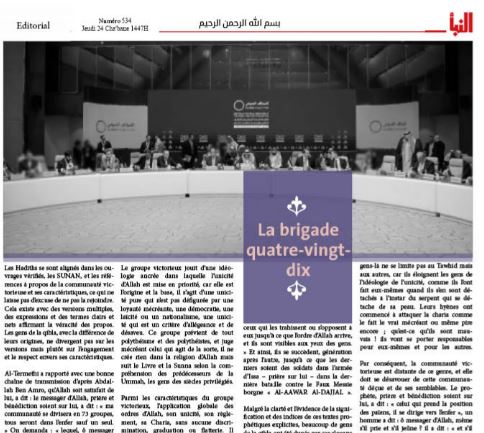
Rather than celebrating a military victory, the editorial is a thinly‑veiled self‑assessment that lays bare the jihadist outfit’s mounting difficulties in Syria: dwindling recruitment, internal dissent, and an increasingly hostile operating environment. Instead of focusing on the political ramifications, the newspaper used the occasion to launch a broader attack on Muslim rulers and societies that, in IS’s view, have “watered down” Islam by embracing secularism, democracy and nationalism. The piece repeatedly denounced the coalition as an “international Crusader” alliance steeped in “apostasy and kufr” (unbelief), while simultaneously positioning IS as the sole guardian of “God’s path.”.
The editorial’s rhetoric is a textbook example of IS’s attempt to compensate for on the ground setbacks with ideological grandstanding:
• Recruitment woes – The article’s emphasis on “unwavering commitment” to Sharia hints at a need to reassure a shrinking base that the group remains the true bearer of Islam, even as its territorial footprint in Syria has collapsed to a handful of isolated pockets.
• Leadership infighting – The text calls out two self identified IS supporters, “Abu Firas al Suri” and “Abu Muhammad al Maqdisī,” accusing them of hypocrisy for warning women in IS controlled camps to avoid phones while simultaneously broadcasting videos that could expose those same women. The criticism signals internal friction and a struggle to maintain discipline among a dispersed network.
• Security concerns – A separate warning in the same issue labels smartphones the “biggest enemy” for IS members, describing online platforms as “fertile ground for Arab government intelligence.” The admonition reflects an acute awareness that the group’s communications are increasingly compromised, a vulnerability that has already led to a series of arrests and drone strikes on remaining hideouts.
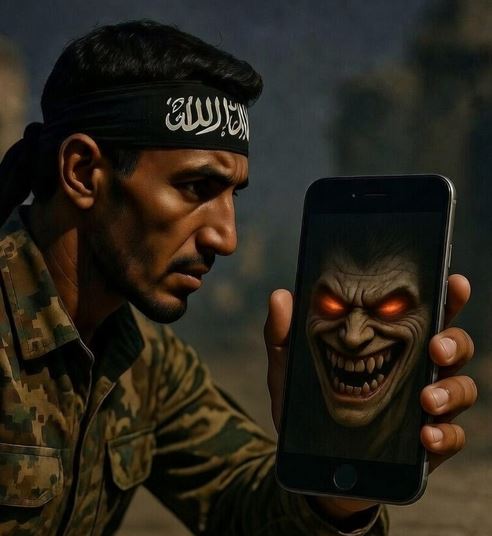
• Geographic marginalisation – The editorial singles out Idlib – described as a “rubbish bin” where “nifāq” (hypocrisy) and “taqiyya” (concealing belief) thrive – as a symbol of the broader loss of influence. By branding the north west as a corrupt environment, IS signals that even in areas where it once enjoyed local support, its narrative now rings hollow.
Analysts Weigh In
“IS’s messaging is increasingly defensive,” says Dr. Lina Haddad, a senior analyst at the Middle East Institute. “When a propaganda outlet spends more time attacking its own supporters than celebrating a coalition’s addition, it’s a sign that the organization is fighting for relevance, not victory.”

Security experts note that the group’s focus on internal discipline—especially the admonition against phone use—mirrors a pattern seen in other declining insurgencies, where operational security becomes a primary concern as external pressure mounts.
As ISIS continues to grapple with internal divisions and external pressures, its ability to inspire meaningful action remains in question. The group’s latest message underscores its determination to remain a player in Syria’s conflict, but its success will depend on its ability to overcome its current challenges and regain the trust of its followers.
ISIS’s latest message is a testament to the group’s resilience, but also its vulnerability. As it struggles to maintain its narrative and operational capabilities, the group faces an uncertain future in Syria and beyond. The question remains: Are ISIS efforts to maintain a footprint in Syria purely for public image or is there a longer-term plan to re-establish a caliphate in its former heartland? And more concerningly for its supporter base how does the group continue to function effectively whilst paranoid about its security and fears of being arrested by Arab government intelligence agencies.