

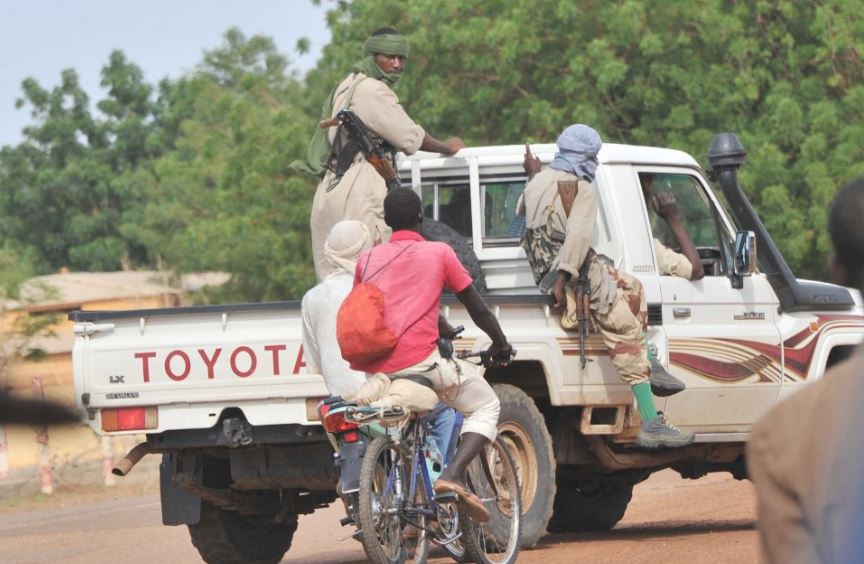
In May 2025, a disturbing report emerged that JNIM had sealed off the town of Diafarabe, cutting off all access roads and preventing vehicles from entering or leaving, including traders who relied on the weekly market to sustain their livelihoods. This egregious act is not an isolated incident; JNIM and other extremist groups in the Sahel region have been employing blockades as a primary tactic for years, wreaking havoc on the civilian population.
The true horror of this situation lies in the fact that JNIM is using blockades to strangle the local economy, exerting total control over the flow of goods and people. By doing so, they dictate what essentials are allowed to enter and exit, effectively imposing their own twisted form of taxation on the civilian population. This has led to a catastrophic situation where people are forced to pay exorbitant amounts for basic necessities like food and medicine, merely to survive.
The impact on civilians is nothing short of catastrophic. Truck drivers, traders, and ordinary citizens are being robbed, kidnapped, and even executed as they attempt to navigate the treacherous terrain. The brutal treatment of those caught in the crossfire is a grim reminder of the ruthless nature of JNIM’s tactics. The June 2024 torching of four trucks on the RN16 near Boni, the abduction of truck drivers and their assistants, and the execution of hostages, including a health centre driver and a school director, are just a few examples of the atrocities committed by JNIM.
The humanitarian crisis unfolding in the Sahel region is directly impacted by JNIM’s cynical exploitation of the civilian population. By controlling the flow of goods and imposing their own taxes, JNIM is able to generate significant revenue, which is then used to fund their military operations, purchase arms, and recruit new members. Meanwhile, the civilian population is left to suffer the devastating consequences of these blockades, with many businesses forced to close and prices skyrocketing.
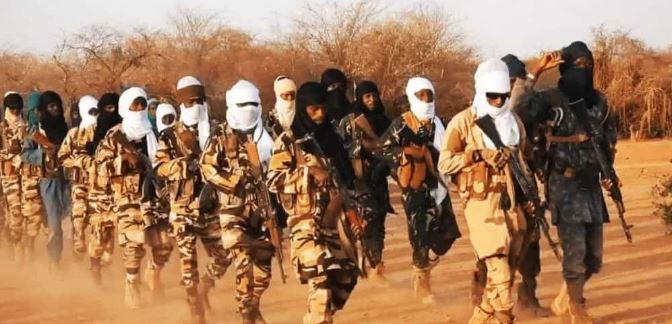
The use of blockades as a tactic is not limited to just one or two towns; nearly 40 towns have been isolated, cutting off about 2 million people from the rest of the country. The situation is further exacerbated by the fact that JNIM has been known to use forced evictions and displacements to clear territory, leading to millions of people being displaced and in dire need of humanitarian aid. As of March 2025, at least 2.8 million people were internally displaced in the central Sahel region, with 2.1 million in Burkina Faso alone.
The testimony of Souleymane Tangara, a Souleye town Councillor, paints a heart-wrenching picture of the hardships faced by those living under JNIM’s blockades. “We are not at peace. This is the third year in a row that we have not been able to grow crops… If this continues, hunger will destroy the country. We have not had a school for two years. A country is nothing without education. We no longer have any health centres or medicines. What can we do when our loved ones fall sick? We no longer have our livestock, which was our hope. Armed men have stolen all our animals.” This is a stark reminder of the human cost of JNIM’s brutal tactics.
The actions of JNIM goes against the Islamic values of mercy, welfare, and compassion. Islam emphasizes the importance of protecting human life, dignity, and well-being. The Quran states, “Whoever takes a life, unless as a punishment for murder or mischief in the land, it will be as if they killed all humanity; and whoever saves a life, it will be as if they saved all of humanity. ” (Quran 5:32). JNIM’s brutal tactics, including blockades, kidnappings, and executions, are a stark contradiction to these values.
In Islam, the concept of “Rahma” (mercy) is deeply ingrained, emphasizing the importance of showing compassion and kindness to all human beings. The Prophet Muhammad (peace be upon him) was known for his mercy and compassion towards all people, including his enemies. JNIM’s actions, on the other hand, demonstrate a callous disregard for human life and dignity.
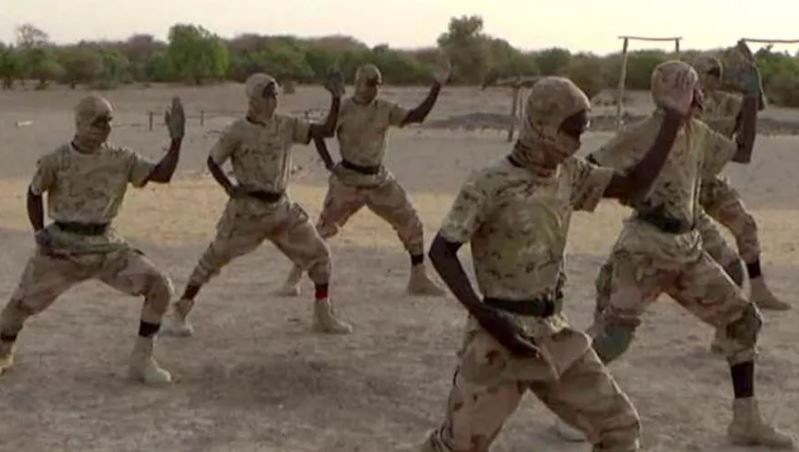
Furthermore, Islam places great emphasis on the welfare of the community, with the Quran stating, “Cooperate with one another in goodness and righteousness, and do not cooperate in sin and transgression” (Quran 5:2). JNIM’s exploitation of the civilian population, using blockades to strangle the local economy and imposing their own twisted form of taxation, is a clear violation of this principle.
In conclusion, JNIM’s reign of terror in the Sahel region is a stark reminder of the group’s utter disregard for human life and dignity. The use of blockades as a tactic to strangle the local economy and exploit the civilian population is a brutal tactic, with devastating consequences evident in the millions of people displaced, the countless lives lost, and the destruction of entire communities. The people of the Sahel region deserve better than to be terrorized and exploited by a group that claims to act in the name of Islam.