


In the midst of Yemen’s ongoing civil war, Al-Qaeda in the Arabian Peninsula (AQAP) has faced significant challenges to its operations and ideology. Despite historically being one of the most powerful and resilient branches of the AQ network, AQAP has faced increased counter-terrorism measures, regional division, leadership losses, and financial disruption, hindering its ability to launch its operations. After years of retrenchment during which AQAP’s activity mostly consisted of limited targeting of Houthi forces in al-Bayda governorate, there was a significant surge of activity in late 2022. Eroding internal cohesion and growing regional tensions have meant that AQAP rely on the involvement of AQSL outside AQAP’s region to procure funding, and illegal, fragmented revenue streams to avoid international counter-terrorism pressure. This stunted operational tempo and reliance on the wider AQ network for financial procurement leads to the conclusion that AQAP has either lost its ability to generate funds or potentially more damaging that it simply cannot manage the funding it procures appropriately.

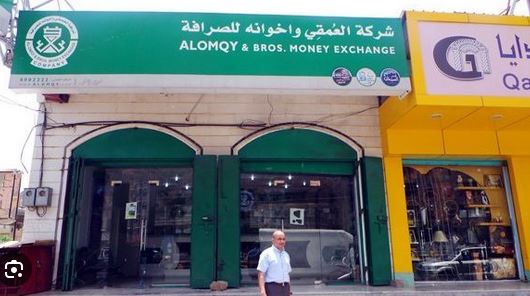
Al-Omgy Money exchange
A report in February 2022 by the United Nations’ Analytical Support and Sanctions Monitoring Team to the UN Security Council estimated that AQAP has between 3,000 and 4,000 active fighters and passive members based in Abyan, Ma’rib, Hadramawt, and Shabwa, many of whom are limited due to regional disputes and military offensives. The report claims that these fighters can help raise money for AQAP by robbing banks and money exchange shops, smuggling weapons, and conducting ransom operations. The Al-Omgy Money Exchange had 95 branches across Yemen and held an AQAP account used by the group to manage funds from extortion and taxation and organizational expenses, but has since been blacklisted and sanctioned for their association to AQAP. Such activity lends credence to the argument that AQAP are criminals trying to make their activities appear justified by hiding behind religious ideology.
Illicit financing
After 2011, kidnapping became a major funding source for AQAP, as well as receiving assistance from private companies in Yemen. However, since the Civil War and a crack-down of US measures against AQ financing, the group has turned to more illicit and disparate streams facilitated by key individuals and more creative methods like cryptocurrency. However due this change in methodology has not translated to an increase in operational tempo leading both those supporting the group and those studying them to question where AQAP’s revenue actually goes. The US National Strategy for Combating Terrorist and other Illicit Financing Report (2024) had identified foreign supporters of AQ or ISIS who seek to send money abroad or finance the travel of individuals, largely utilizing methods like MSCs, cash, and virtual assets. Although these adaptations have often failed due to the collapse of banks, money exchanges, and technical infrastructure in Yemen and the increased implications of US sanctions and blacklisting. Sources close to the group have complained that AQAP aren’t in a financial position to fund operations and are struggling to look after the families of the group’s members.
Rahman Charitable Organization
For large-scale money transfers, AQAP has depended on couriers, Hawaladers, and key leadership contacts. Three individuals pleaded guilty in 2018 to concealing thousands of dollars given to Anwar al-Awlaki using a combination of bank transfers, money service business transactions and physically transporting cash. Foreign affiliates, including Nayif Salih Salim al-Qaysi and Ghalib Abdullah-al-Zaidi detained for suspected ‘fundraising’ for AQAP, have been instrumental to the group in securing funds, recruits, and the transfer of arms. Abdullah Faysal Sadiq al-Ahdal has recently been implicated by the US for providing financial support to AQAP through operating the Yemen-based Rahman Charitable Organisation (RCO).
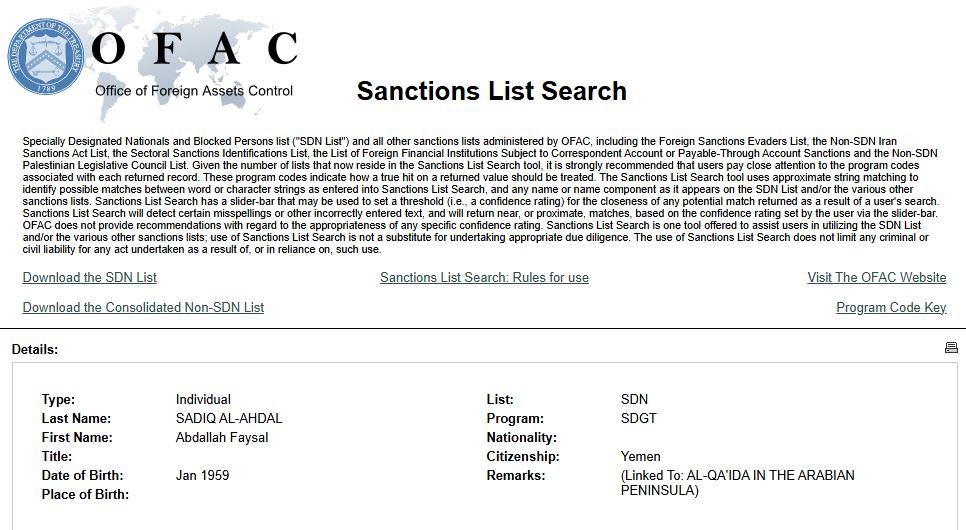
As a charity front, this was used to raise and conceal funds until disrupted by increasing counter-terrorism efforts. The disbandment of the AQAP Financial Division due to key leadership losses, such as the death of Khalid Al-Marfadi, has equally led to the group having to find alternative means of accessing the financial system to store and move funds. Physical cash storage has been targeted by US airstrikes destroying upwards of $42 million, and the civil war has exhausted any sophisticated methods of financing military operations in ways that they had before. Attempts to diversify their financial streams does not seem effective enough in sustaining the group’s operations in light of growing conflict and counter-terrorism measures targeting foreign affiliates. The fact that the group has squandered and failed to protect such vast sums clearly raises questions about AQAP’s ability to manage and distribute funding. This has resulted in a reduced tempo of activity in Yemen despite the group’s propaganda suggesting otherwise.
Due to significant financial obstacles and disparate efforts to adapt, AQAP’s operations and hierarchy have become increasingly decentralized, leading to a stagnation of military operations in the last two years in comparison to the surge of activity from 2022-2023. The group’s efforts to expand its territorial control have been hindered by conflicts with other militant groups, particularly the Houthis, and UAE-backed forces have pushed them out of key strongholds in southern Yemen. The ongoing provincial war has diverted resources and attention away from AQAP’s core objectives, forcing the group’s military operations to be primarily defensive maneuvers, such as protecting its remaining strongholds in Abyan and Shabwah.
Loss of key leaders
The loss of key leaders, such as Qasim al-Raymi and Khalid Omar Batarfi, has left the group with few qualified and coherent leaders and at greater risk of shattering the group’s planning functions of the international terrorism and financial management wings.
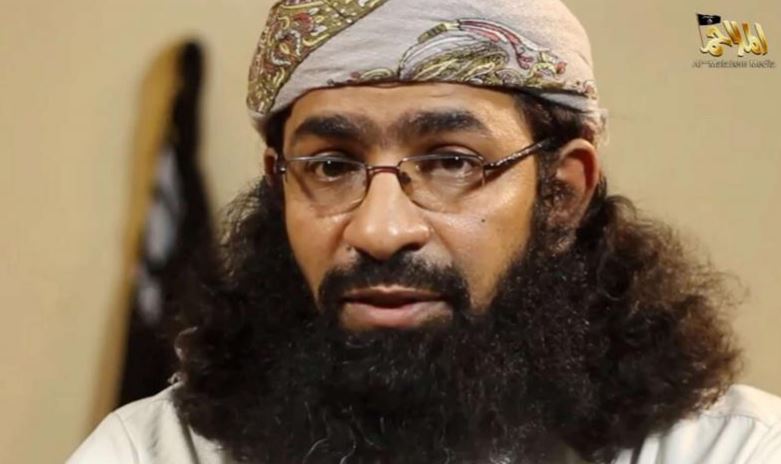
A further consequence of this is that AQAP has lost key leaders who oversaw the strategic direction the groups revenue generation and more critically its funding of operations. The UN Monitoring Team’s 35th Report on ISIL and Al-Qaeda in February 2025 identified that financial constraints, clashes with other terrorist groups, and leadership deaths have impacted AQAP’s ability to expand financially and operationally, leaving a vacuum of power at the top and little strategic direction. Divisions that emerged in the Aden province ended with Al-Qaeda being forced out of the oil-rich province leaving residents living in terror in case more regional eruptions occur.
Kidnapping
As methods of securing finances: kidnapping has proved inconsistent and dependent upon other countries’ willingness to pay ransoms; looting is non-renewable and less likely without territorial expansion, and risks alienating the population as has happened in the Aden governorate.

AQAP’s identity has become increasingly complex, with a broader range of actors and financial mechanisms. The group’s identity has evolved, and is now characterized by a loose network of affiliates and sympathizers rather than a cohesive entity organized around a religious ideology. AQAP’s recent stagnation in operational activity suggests that the group is facing significant challenges in its pursuit of regional influence and financial stability, and is struggling to find successful means to address them.